In Tractorscope, adding a database means creating a saved connection that charts, dashboards, filters, alerts, and reports can query live.
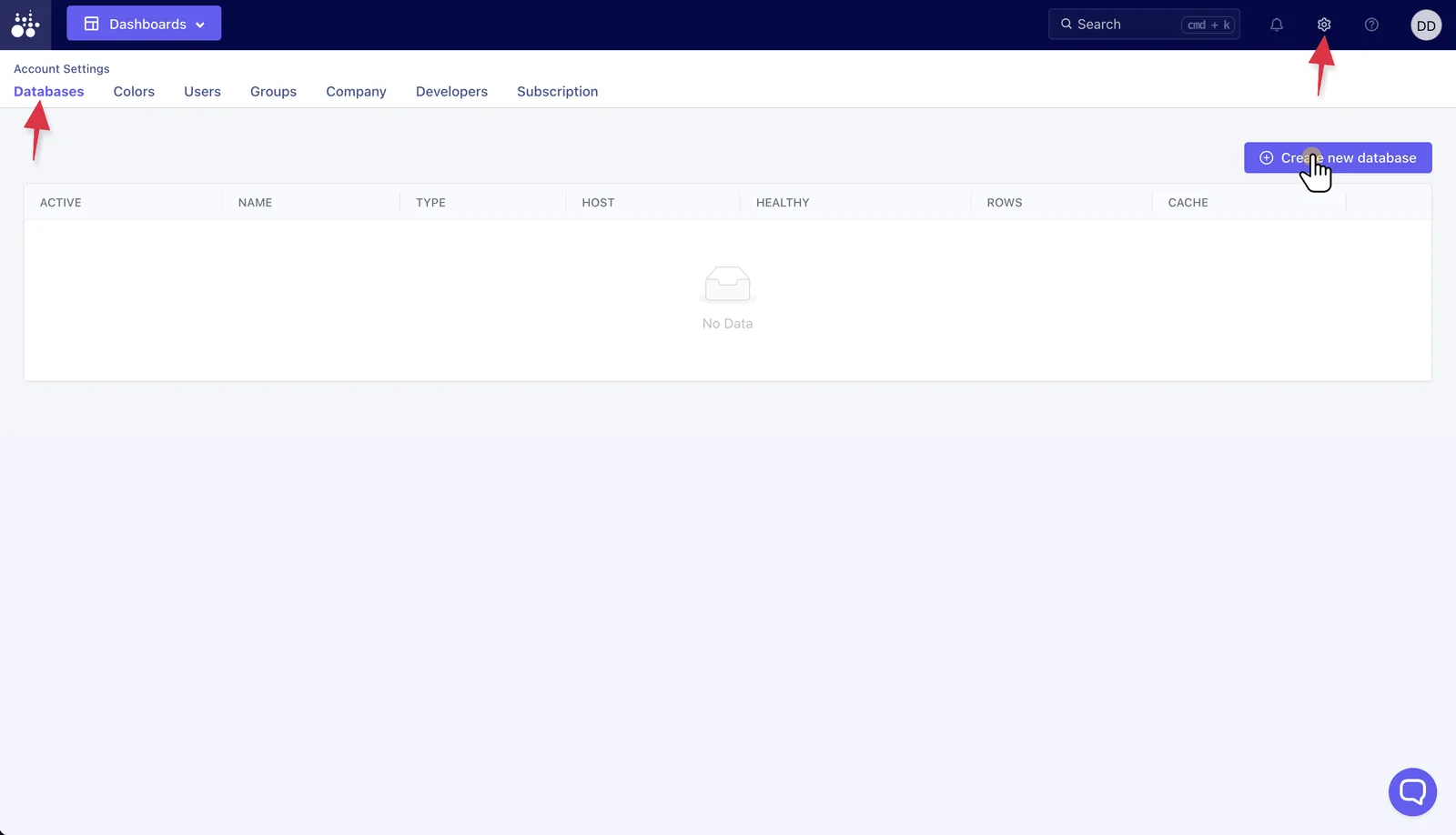
Navigate to the Databases page
The Databases page displays all database connections, their health and the amount of cache storage they are using. To add new database click the 'Create new database' button.
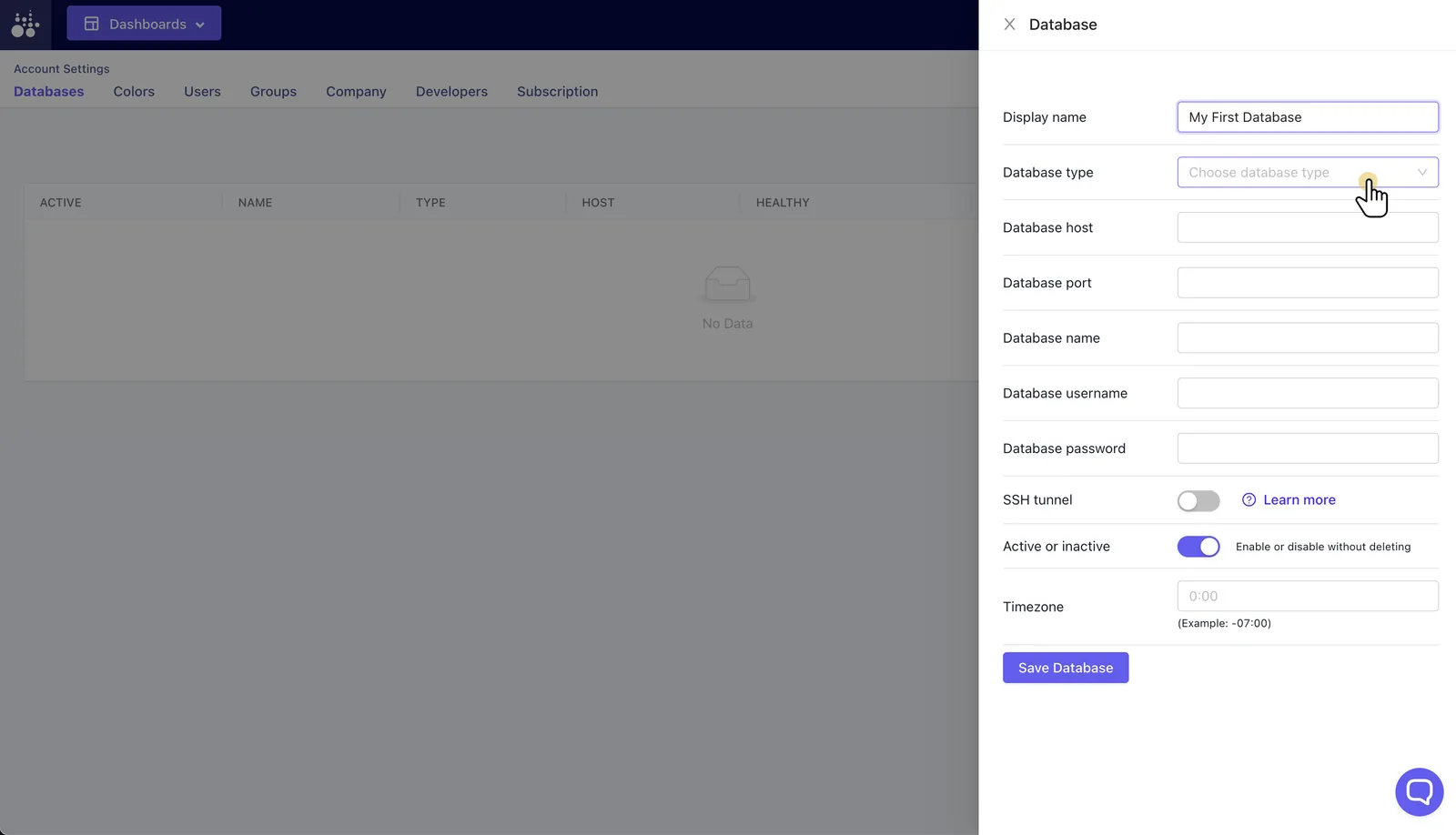
Enter new database details
The following fields are required to successfully add a new database:
- Display name - Something that will clearly define what this database is
- Database type - Choose from:
- MySQL 5.7
- MySQL 8
- Postgres
- MongoDB
- BigQuery
- LibSQL / Turso
- SingleStore
- MotherDuck
- DuckDB (Quack)
- Database host - Host address
- Database port
- Database name
- Database password
- SSH tunnel (optional)
- Active or inactive - This allows for deactivating the database rather than deleting it
- Timezone (optional)
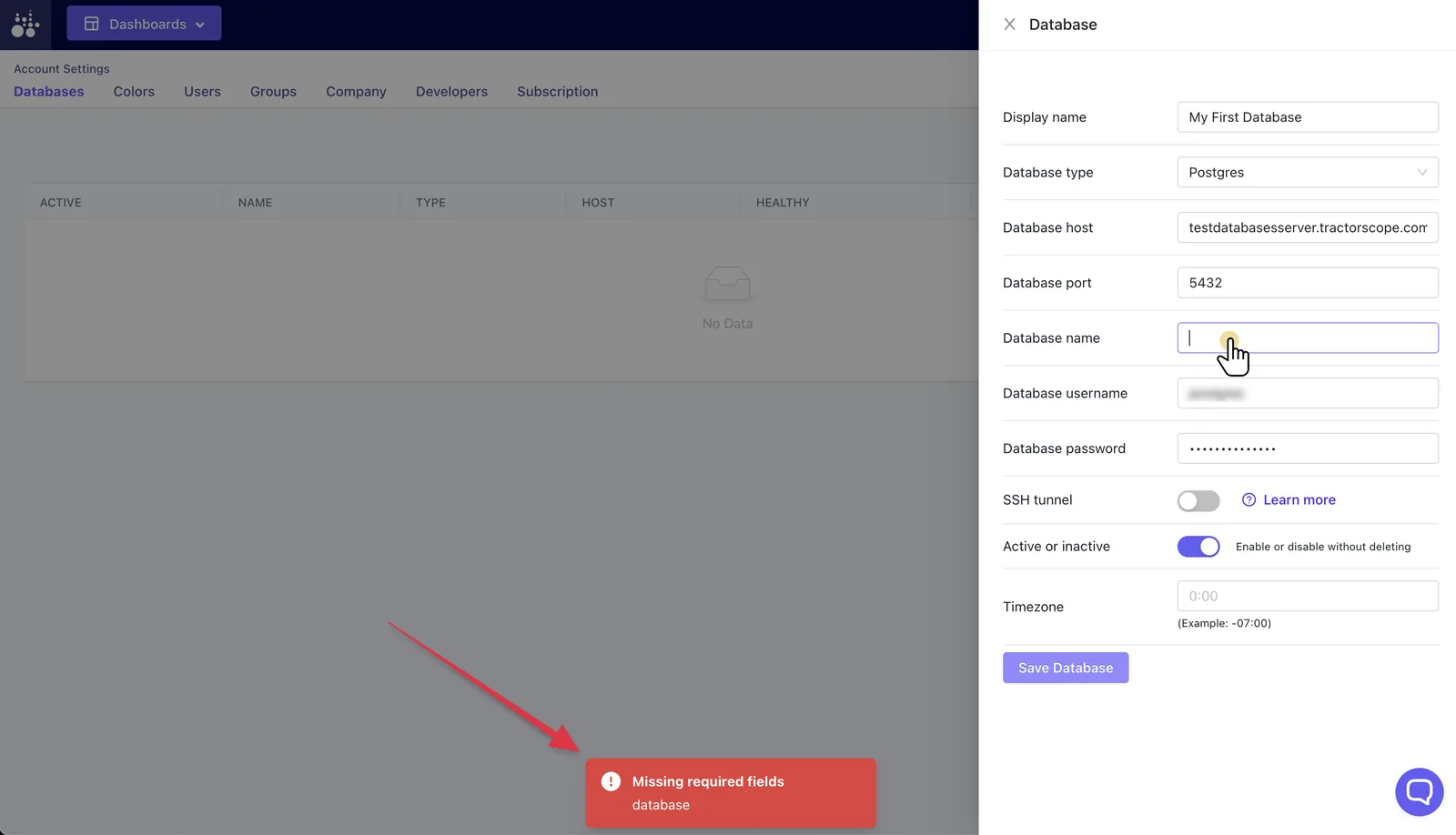
Errors will indicate whether information makes a successful connection or not
Click 'Save Database'
Once the database is saved, Tractorscope will check the connection and display an alert if there are any connection issues.
Upon saving the database, close the overlay side panel.
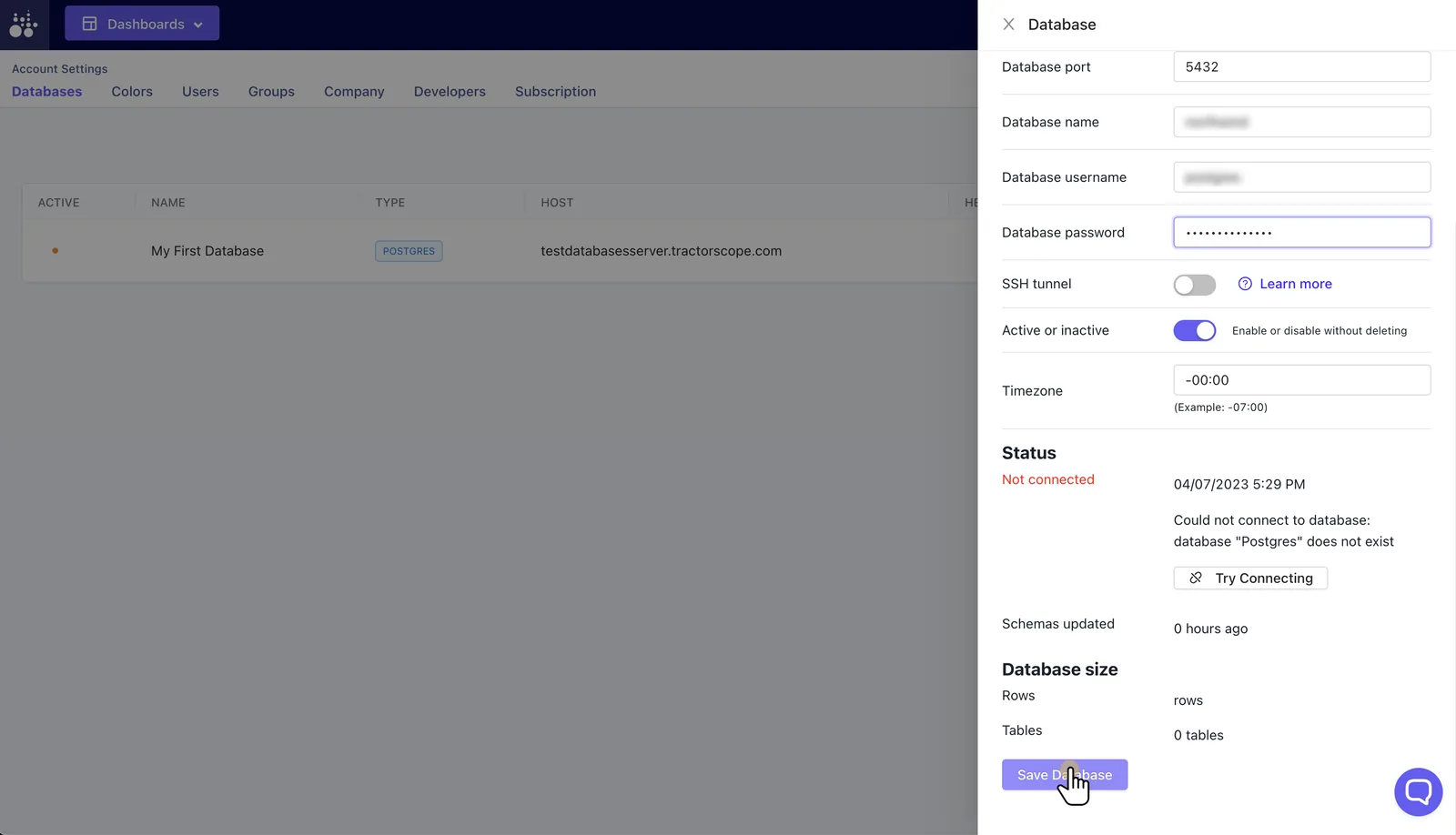
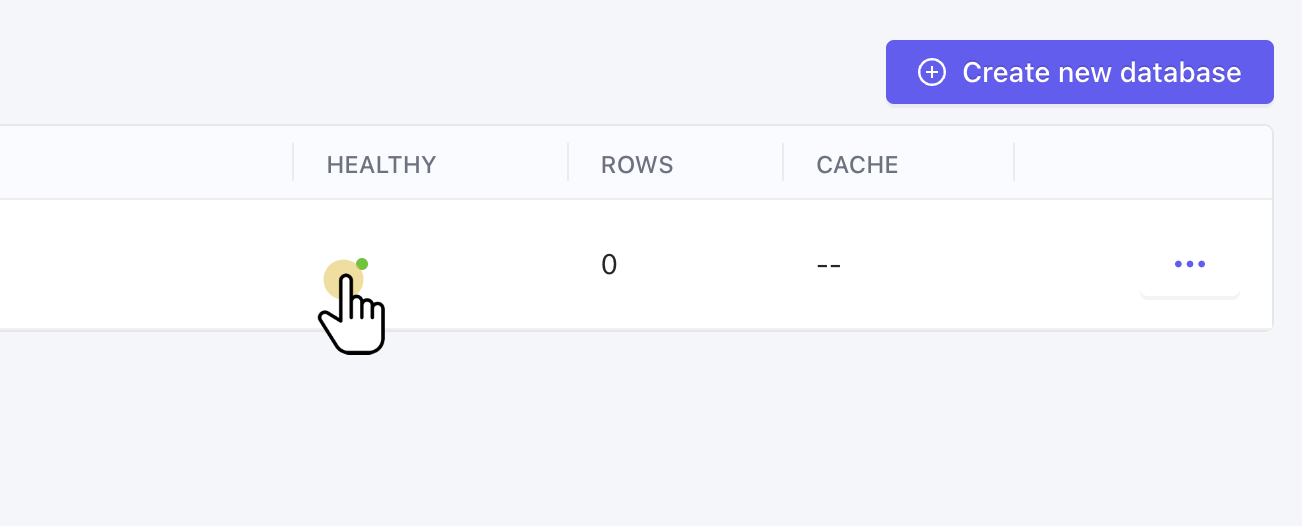
Green light displays healthy connection
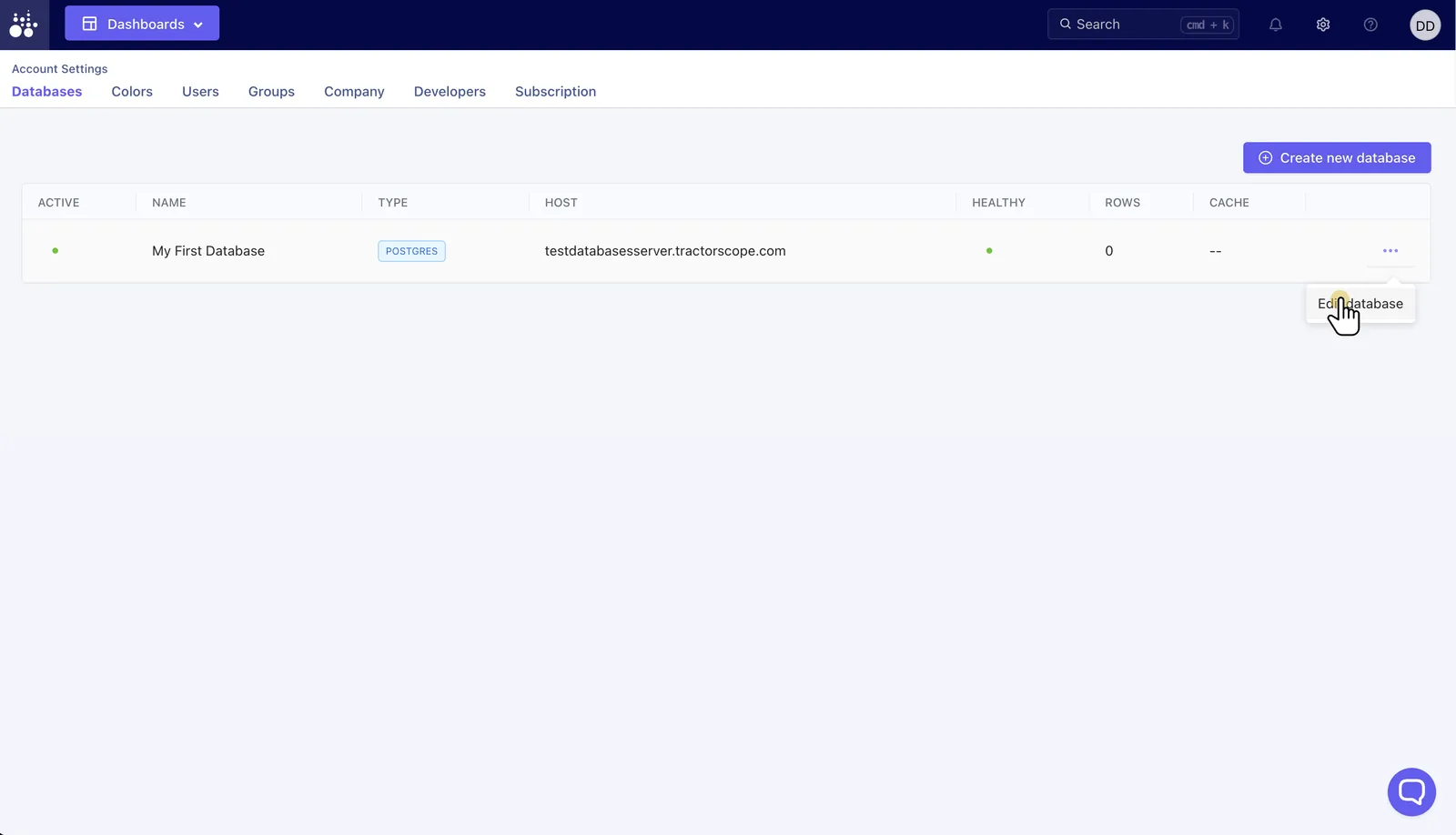
Edit by clicking the ellipsis menu button
Edit, activate, and deactivate databases as needed. You can add as many database connections as you need to build the required visualizations.
FAQ
Which databases can I connect to from this page?
This page covers the connection workflow inside Tractorscope. For the current list of supported database engines and connection options, see the supported databases documentation.
Do I need direct network access from Tractorscope to my database?
Yes. Tractorscope must be able to reach the database host and port, either directly or through an SSH tunnel if the database is private.
What happens after I save a database connection?
Tractorscope validates the connection, saves the configuration, and updates the database list so you can review health and troubleshoot any connection errors.
Can I disable a database connection without deleting it?
Yes. You can mark a connection inactive instead of deleting it, which is useful when you want to pause access temporarily.